Electronegativity
Electronegativity is an atomic level property that defines the ability of an atom in a molecule to attract shared-pair electrons towards itself. Fluorine is the most electronegative element on the electronegativity chart, followed by oxygen and then chlorine. This has several implications. Firstly, it means that fluorine is always negative when combined with other elements. Secondly, it means that oxygen always has a negative oxidation state, except in the very rare case where it forms a compound with fluorine. The difference in electronegativity values reveals the strength of the polarity of a simple two atom chemical bond or a molecule which is directly proportional to its’ chemical properties such as bond length, dielectric strength, dipole moment, chemical state shift and other chemical state properties.
Example of an atom by itself, a polarized atom, two atoms with a polarized bond between them.

A periodic table showing the Pauling Electronegativity values calculated for each atom.
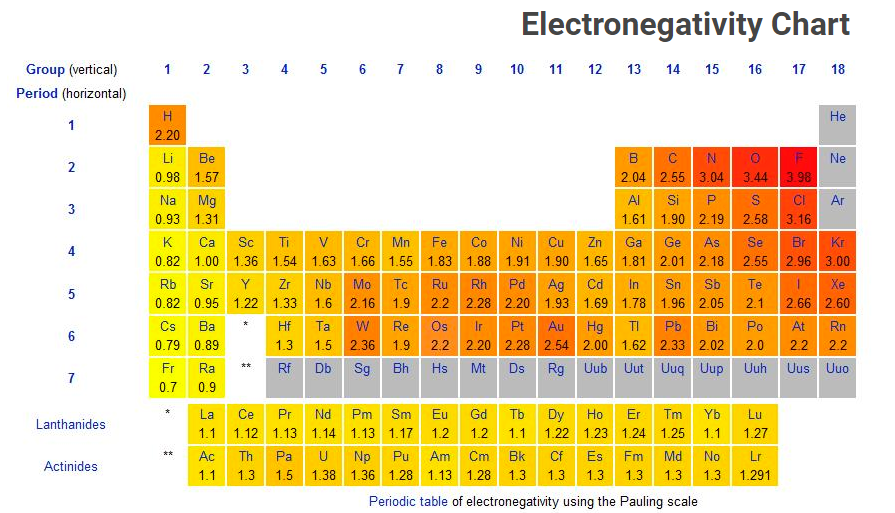
A periodic table showing the trend in electronegativity when considering at all values.

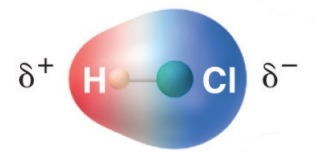
Example of electron polarization in the simple two atom bond between Hydrogen and Chlorine.
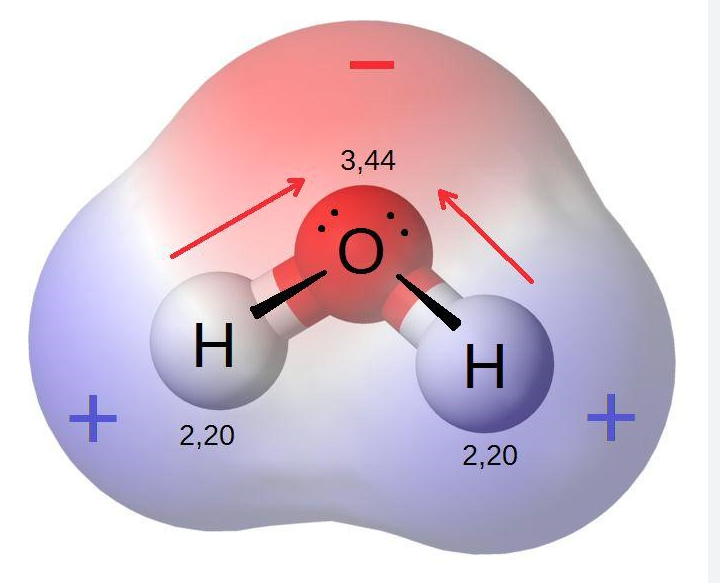
Example of electron polarization in Molecule of Water (H2O) showing the overall polarization.