Electron Configuration that is used to describe the number of electrons in any atom is taught in many High Schools. Electron confguration terms are very similar to XPS Peak Notations (Terms) so it might be easy to confuse them at first.
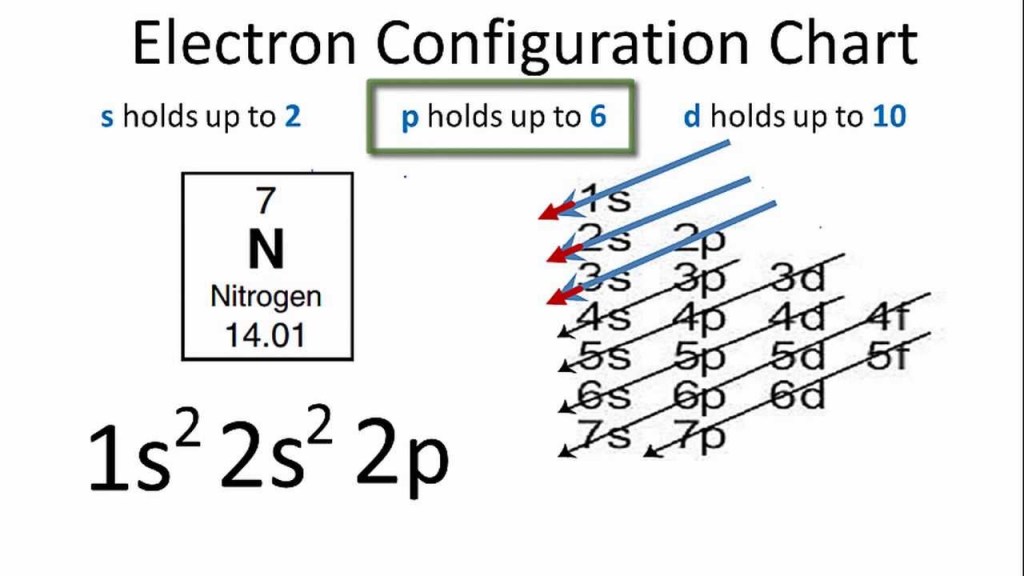
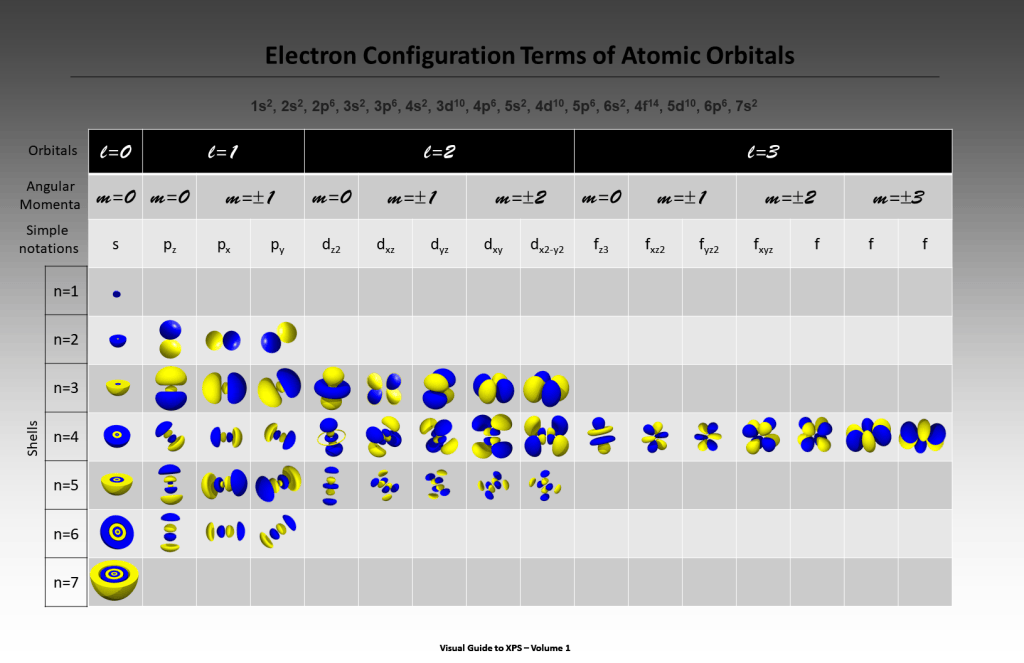
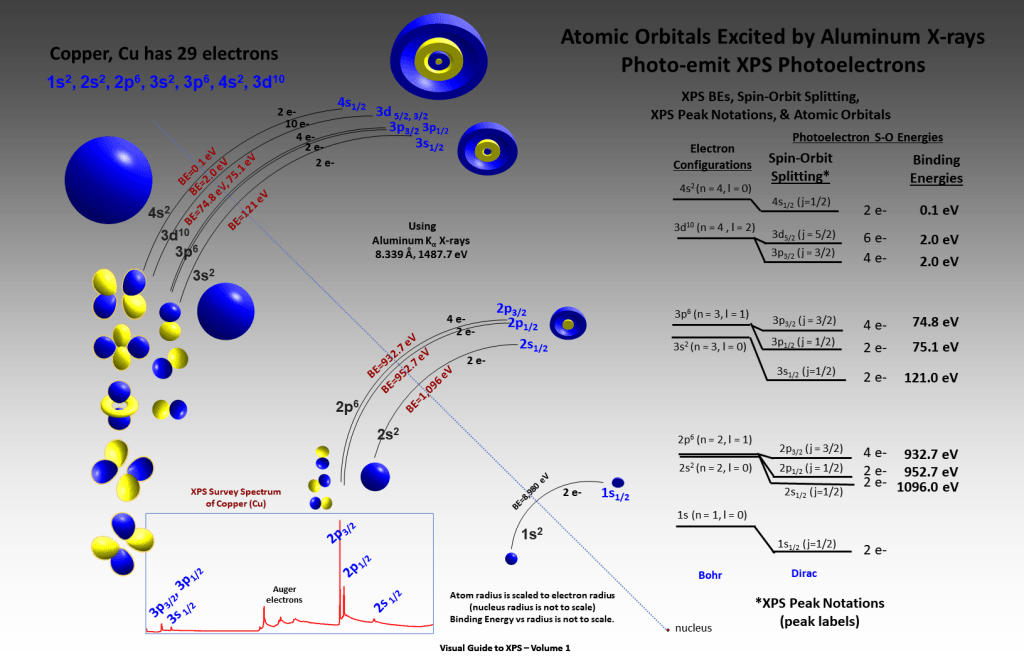
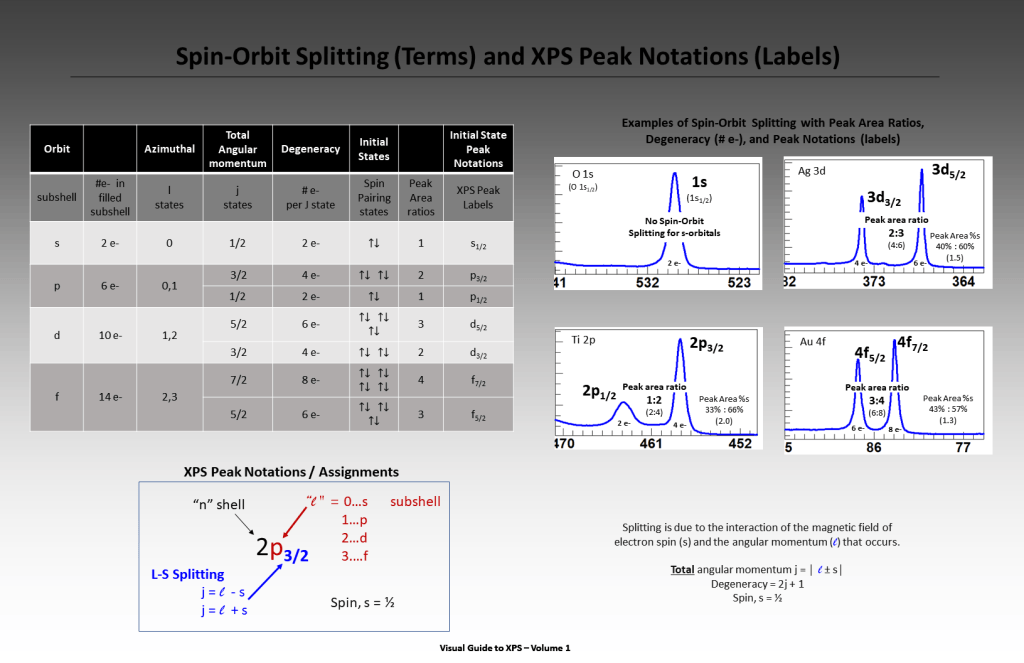
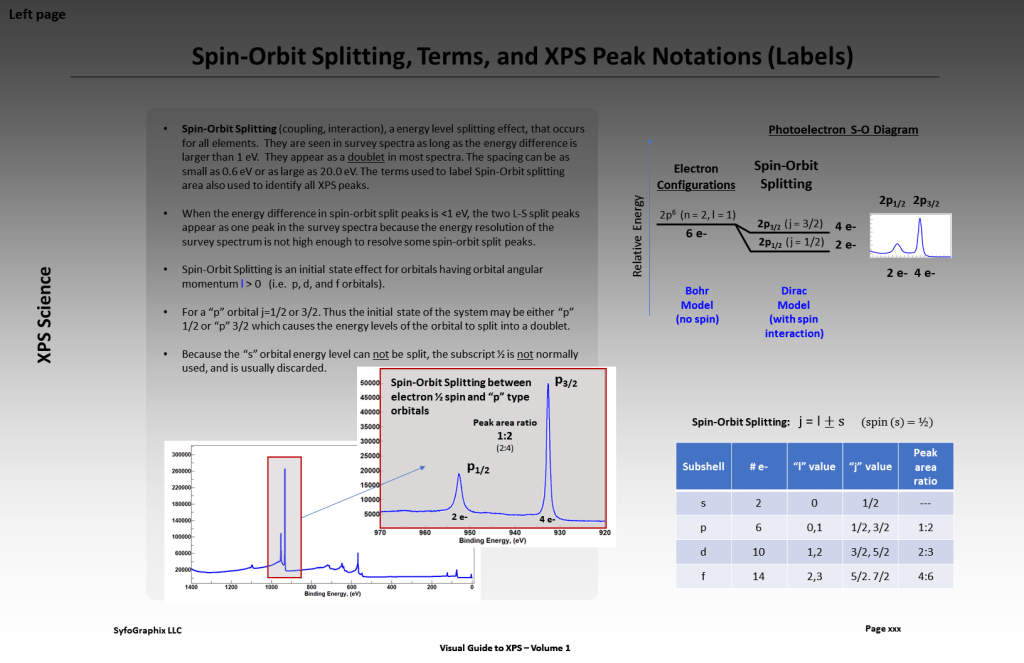
Each element has different numbers of electrons which occupy different principal orbits or principal shells “n” starting with n=1, and progressing to n=6. Depending on the number of electrons in an element the principal shell posseses (produces) different sub-shells (different shapes of orbit due to the angular momentum of the electrons as they orbit the nucleus. There are 4 different shapes for these orbits, which are labeled as “s, p, d, f”. The maximum number of electrons that can exist in the 4 sub-shells are 2, 6, 10 and 14, respectively.
This string is the complete Electron Configuration for Common Elements
1s2, 2s2, 2p6, 3s2, 3p6, 4s2, 3d10, 4p6, 5s2, 4d10, 5p6, 4f14, 5d10, 6p6, 7s2
This schematic labels each of the terms used for Electron Configuration Notation and XPS Peak Notation

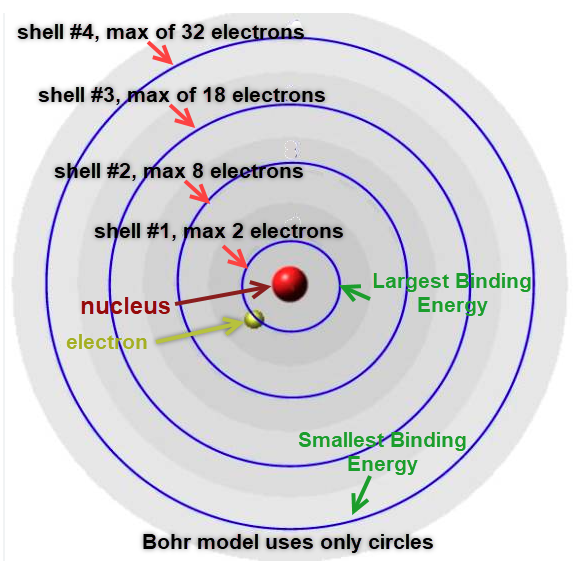
Bohr Model of the Atom has a Nucleus at its Center
with Circular “Shells” that Electrons Occupy
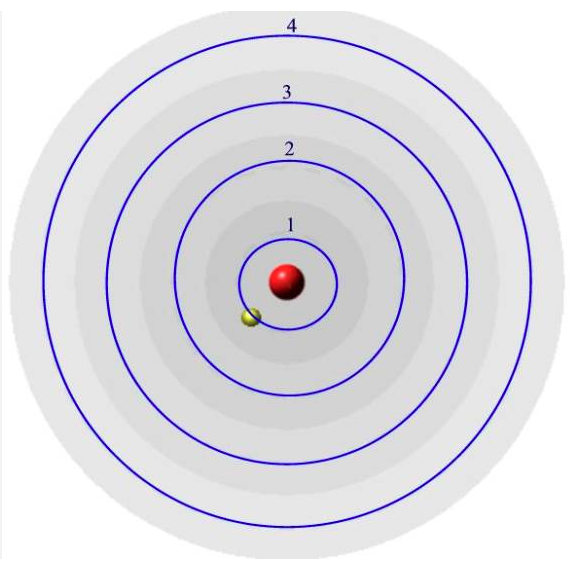
Each Shell in the Bohr model holds a different numbers of electrons.
The innermost shell is shell #1 (n=1). It holds only 2 electrons.
Shell #2 (n=2) can hold a maximum of 8 electrons.
Shell #3 (n=3) can hold a maximum of 18 electrons.
Shell #4 (n=4) can hold a maxium of 32 electrons.
Shell numbers are today defined as Principal Quantum Numbers “n”

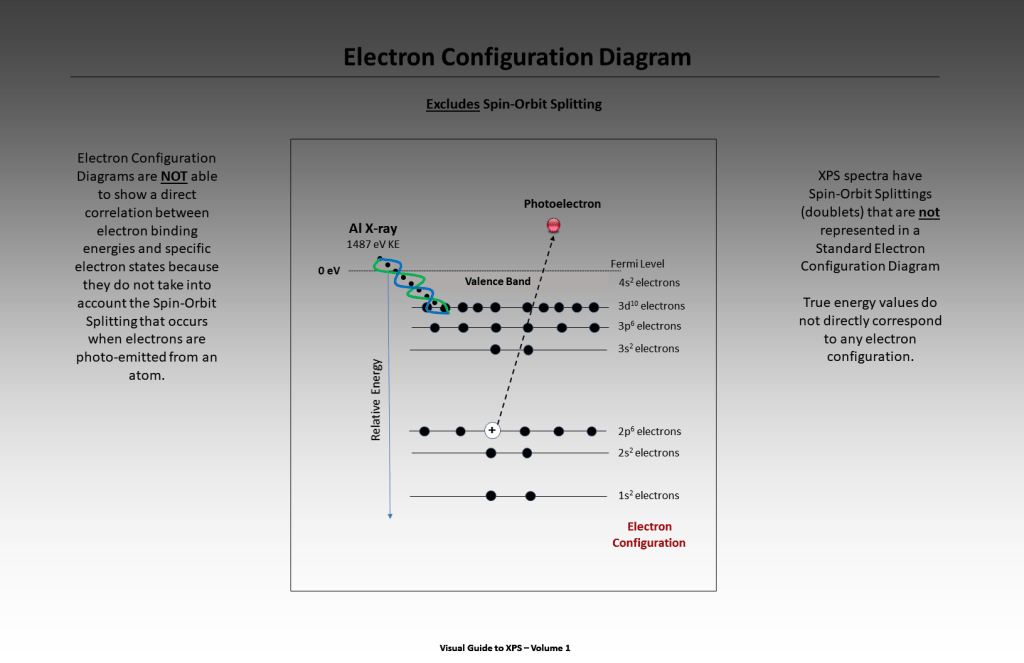
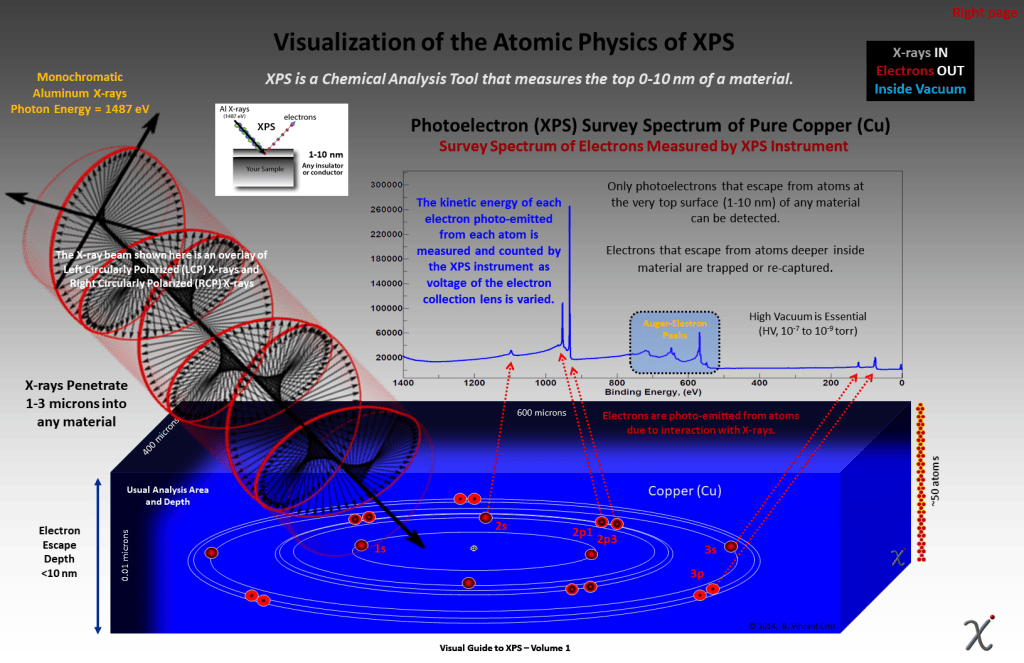
By using XPS we can measure the Binding Energies of Electrons
as they exist in various chemical states.