Summaries of XPS BEs
NOTE: NIST HAS NEVER MEASURED any XPS BEs
from any pure metal, pure element, pure oxides, pure polymer
or any chemical compound listed in the NIST Collection
All 25,000+ XPS BEs were extracted from hundreds of OLD literature
publications by Dr. Charles D. Wagner at U Cal Berkeley)
We Recommend: Use NIST XPS BEs ONLY as a Guide
XPS BEs stored in NIST Collection
were extracted and compiled by Mark Biesinger – UWO
- This collection of BE tables was compiled by M. Biesinger (UWO) by summarizing the BEs listed in the NIST XPS Database of BEs.
- Please review and evaluate the Standard Deviation (Std. Dev.) value when you are using any of these BEs to make any chemical state assignment.
- Large “Std. Dev.” values having only a few # of Reference citings are risky to use and may lead to wrong assignments, decisions and errors. Be careful please. Many researchers depend on your chemical state assignments to be accurate!
- Because the original researcher used C (1s) BEs that could be 284.6 eV, 284.8 eV, or 285.0 eV, the BEs for insulators might vary by as much as 0.4 eV.
- Older publications used different calibration energies for the Cu 2p3/2 BE: 932.2 eV, 932.47 eV, or 932.8 eV. This means that BEs above 500 eV can vary by as much as 0.6 eV for both insulators and conductors.
- The accuracy, precision, and reproducibility of these BEs depends on the efforts used by the original researchers. To learn more, please visit the NIST link in the main menu.
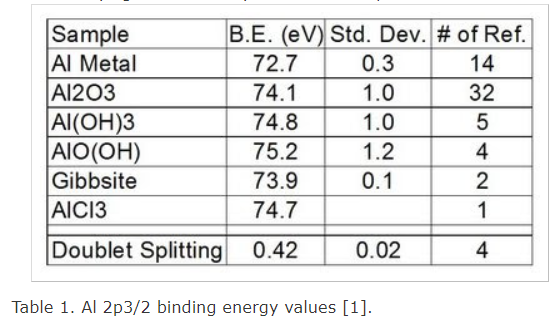
Aluminum, (Al)
Al (2p3/2) BEs
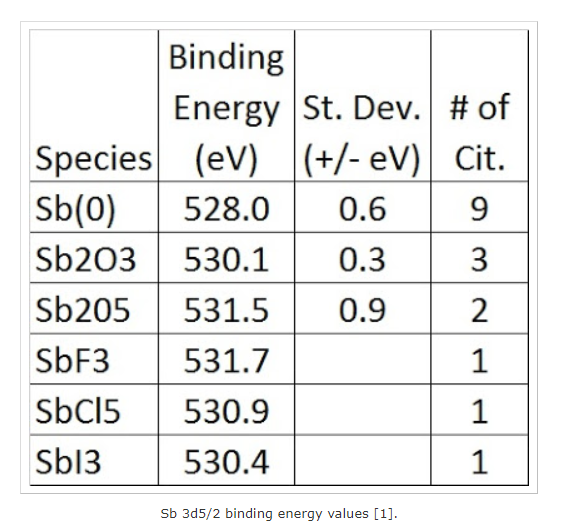
Antimony, (Sb)
Sb (3d5/2) BEs
Argon, (Ar)
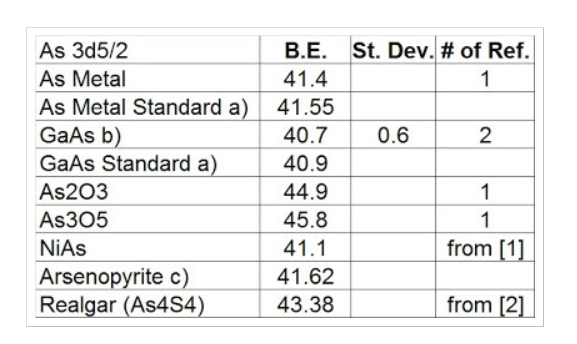
Arsenic, (As)
As (3d5/2) BEs
Barium, (Ba)
Ba (3d5/2) BEs
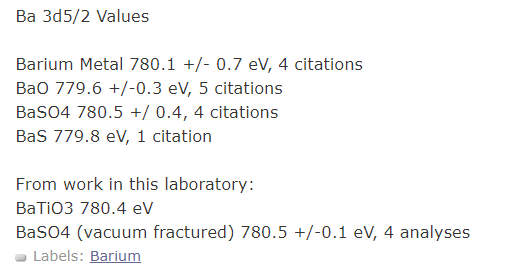
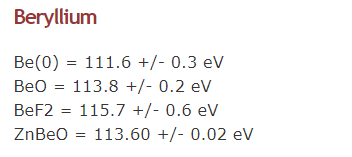
Beryllium, (Be)
Be (1s) BEs
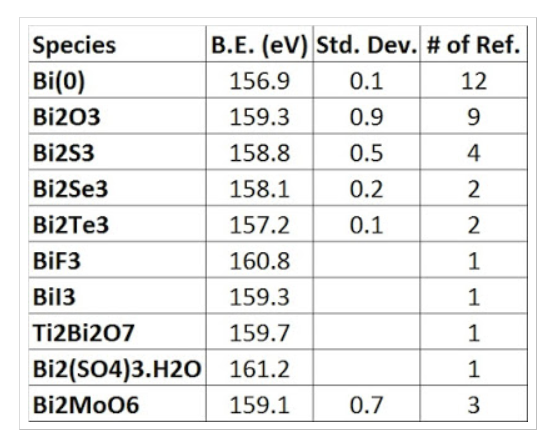
Bismuth, (Bi)
Bi (4f7/2) BEs
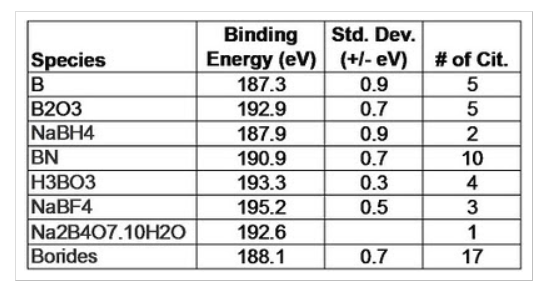
Boron, (B)
B (1s) BEs
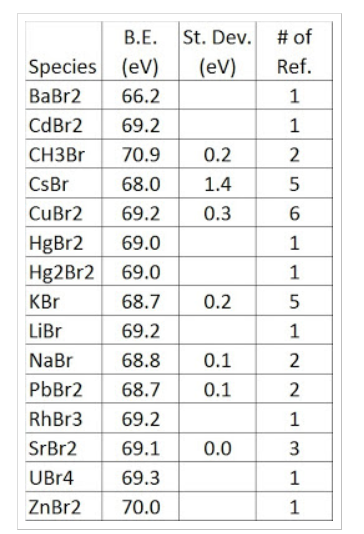
Bromine, (Br)
Br (3d5/2) BEs
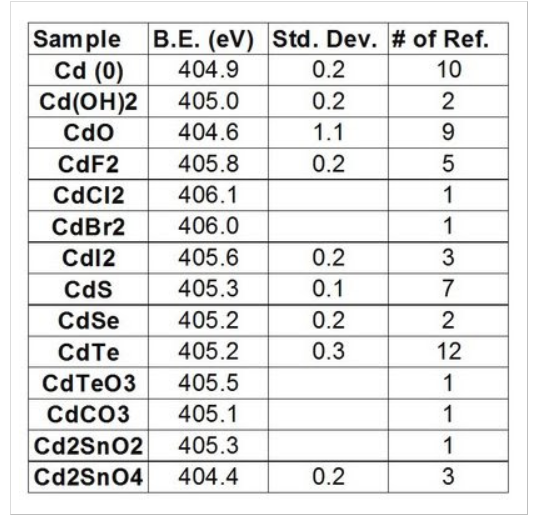
Cadmium, (Cd)
Cd (3d5/2) BEs
Calcium, (Ca)
Ca (2p3/2) BEs

Carbon, (C), in Polymers
C (1s) BEs

Cerium, (Ce)
Cesium, (Cs)
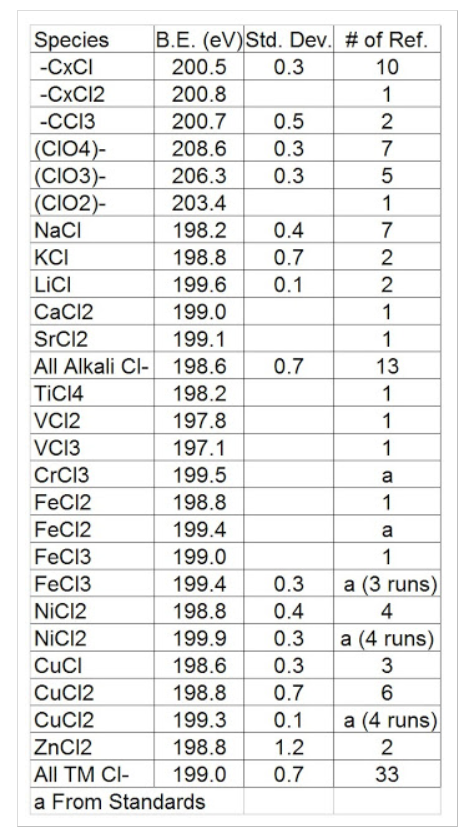
Chlorine, (Cl)
Cl (2p3/2) BEs
Chromium, (Cr)
Cobalt, (Co)
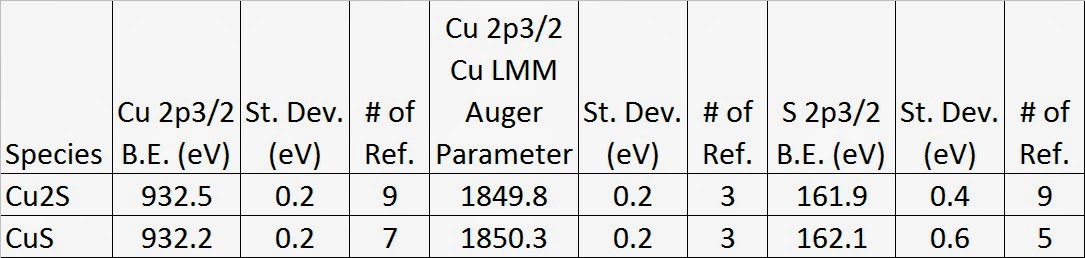
Copper, (Cu)
Cu (2p3/2) BEs
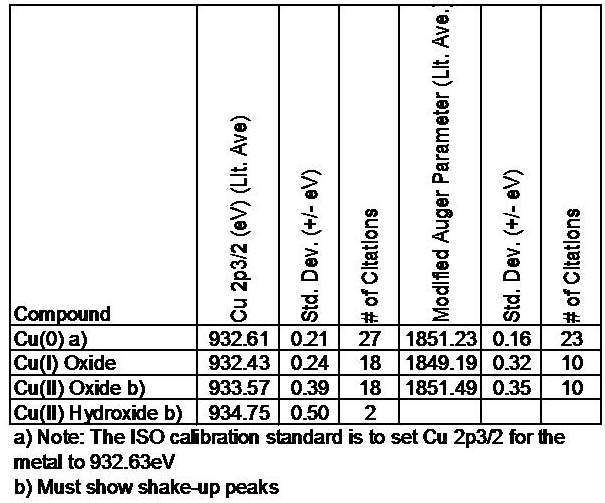
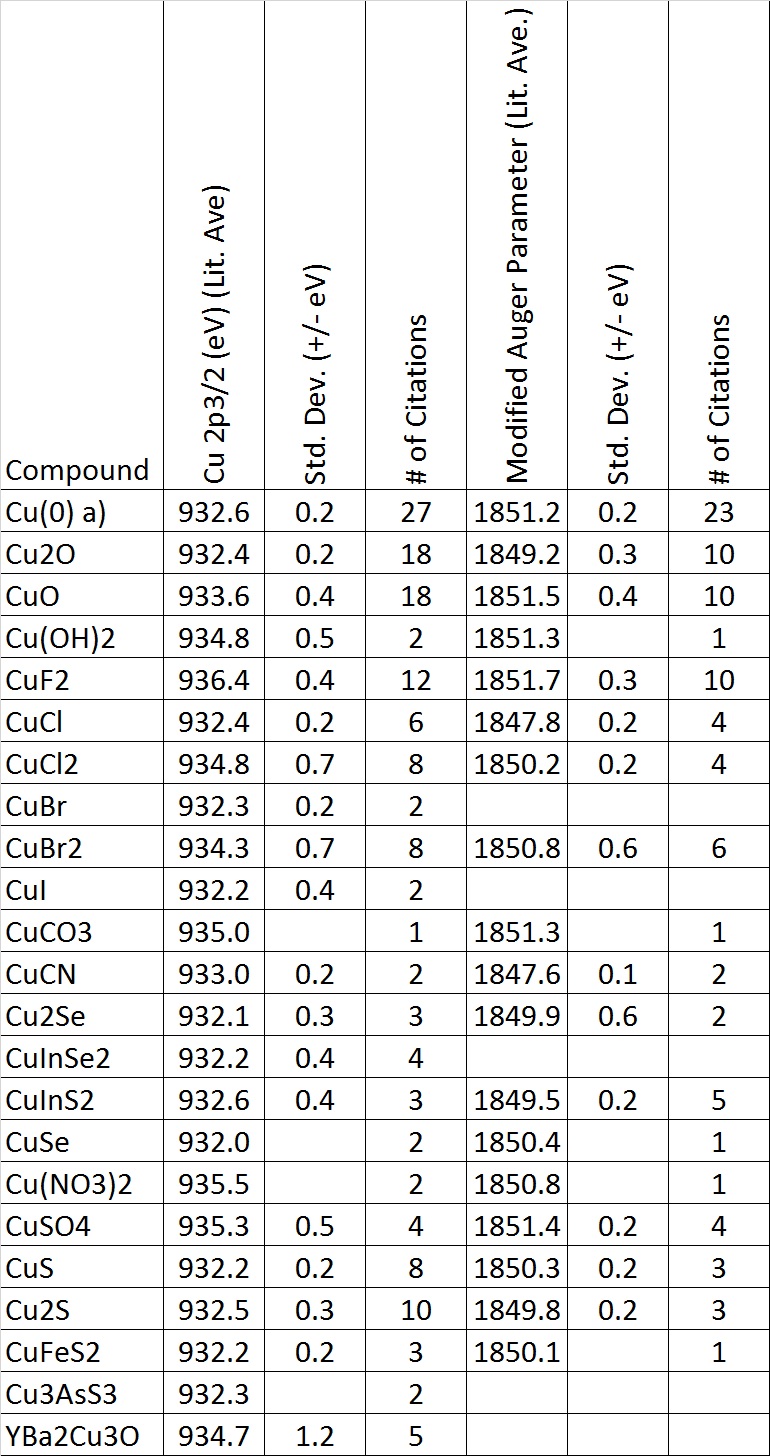
Copper, (Cu)
Cu (2p3/2) BEs
Dysprosium, (Dy)
Erbium, (Er)
Europium, (Eu)
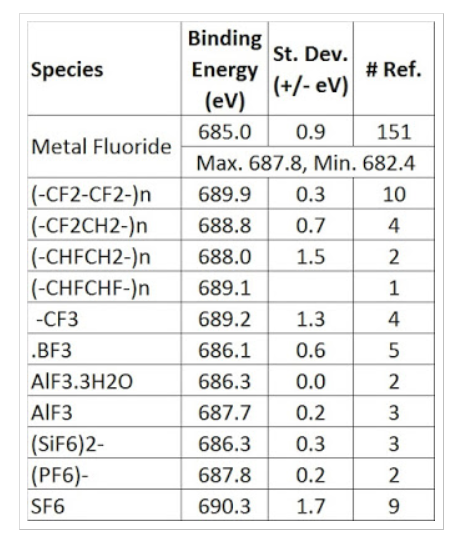
Fluorine, (F)
F (1s) BEs
Gadolinium, (Gd)
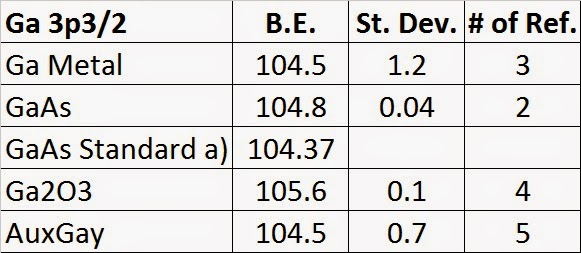
Gallium, (Ga)
Ga (3p3/2) BEs
Ga (3d5/2) BEs

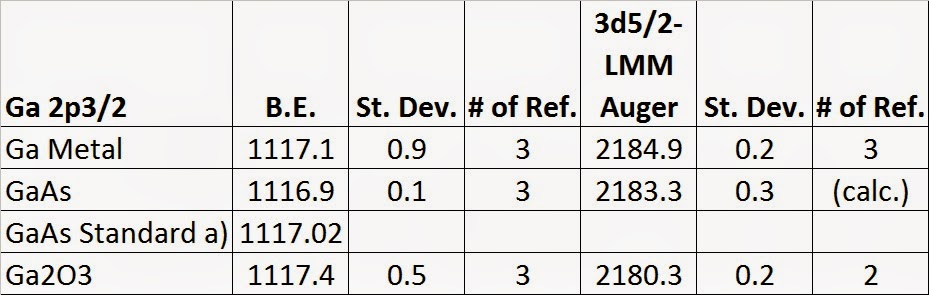
Ga (2p3/2) BEs
Germanium, (Ge)
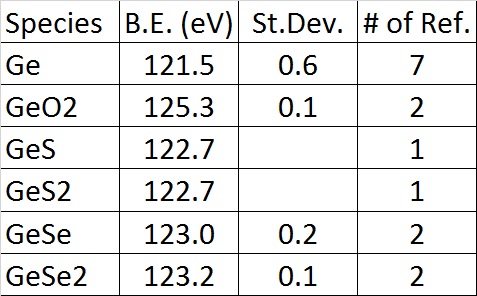
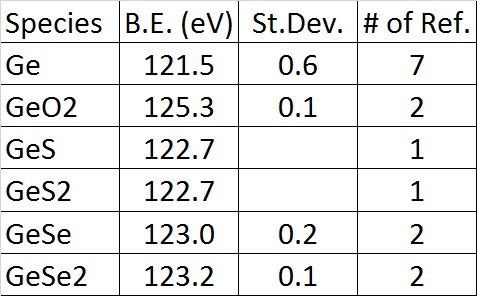
Ge (3p3/2) BEs
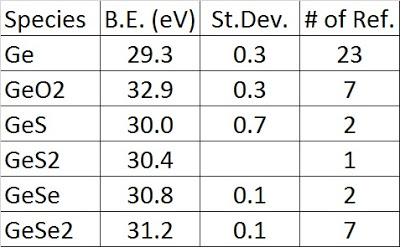
Ge (3d5/2) BEs
Hafnium, (Hf)
Hf (4f7/2) BEs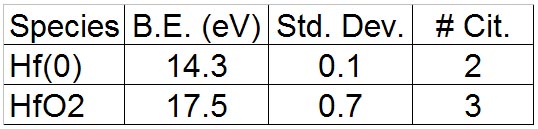
Holmium, (Ho)
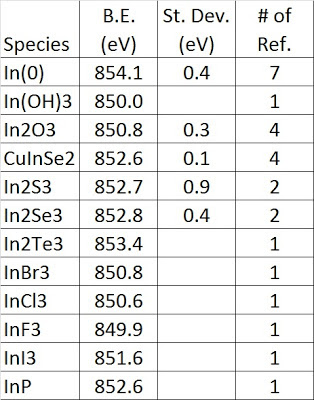
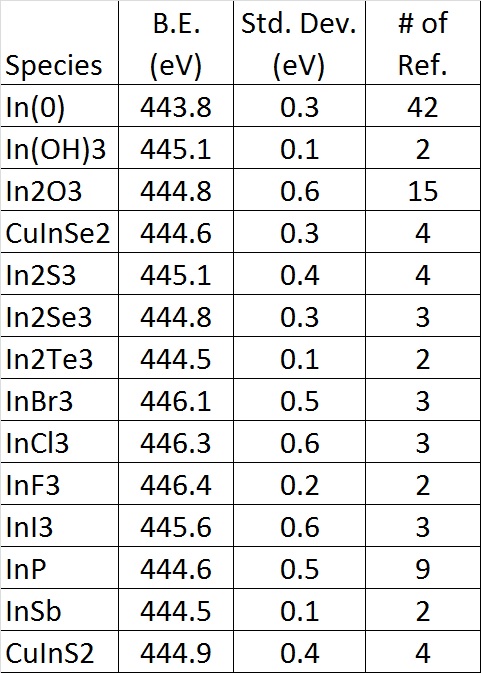
Indium, (In)
In (3d5/2) BEs
Iodine, (I)
I (3d5/2) BEs

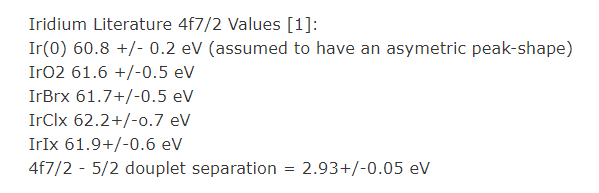
Iridium, (Ir)
Ir (4f7/2) BEs
Lanthanum, (La)
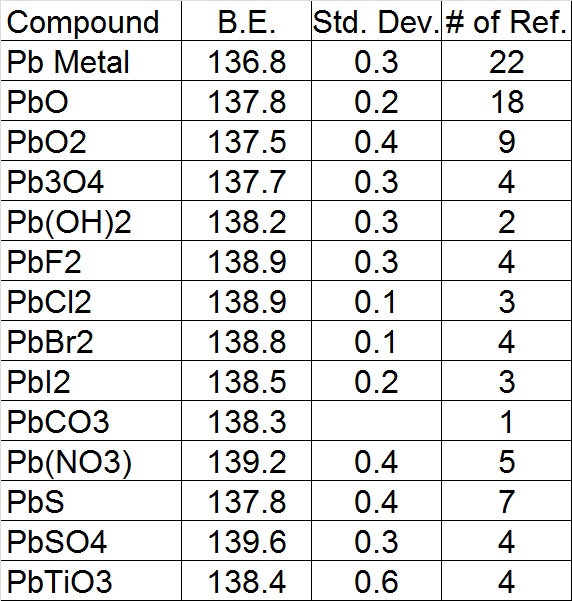
Lead, (Pb)
Pb (4f7/2) BEs
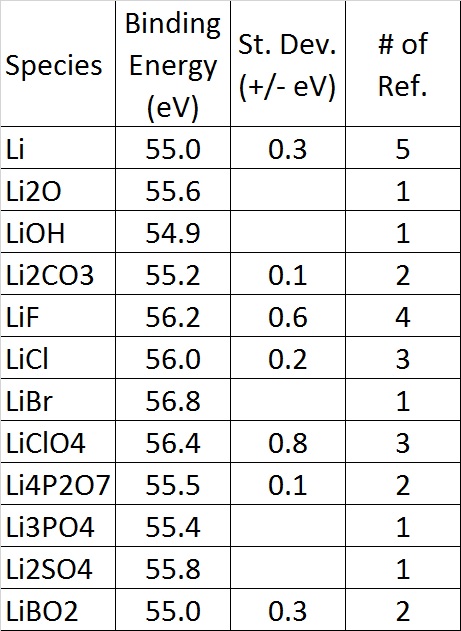
Lithium, (Li)
Li (1s) BEs
Lutetium, (Lu)
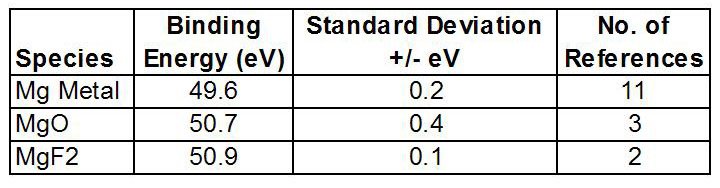
Magnesium, (Mg)
Mg (1s) BEs
Manganese, (Mn)
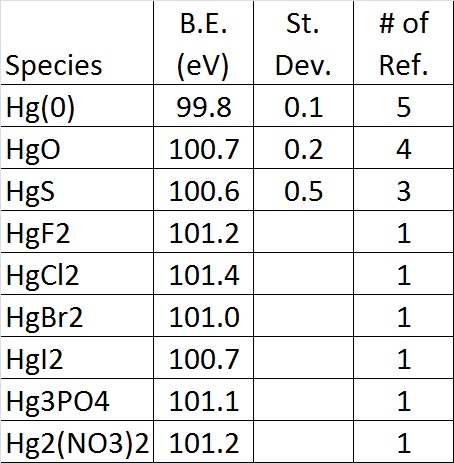
Mercury, (Hg)
Hg (4f7/2) BEs
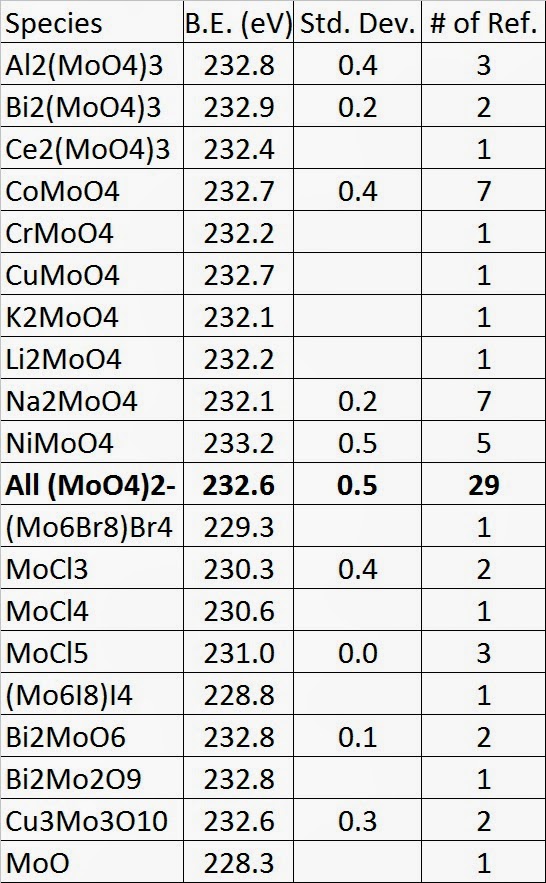
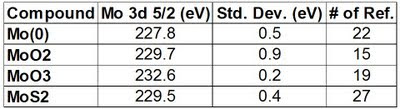
Molybdenum, (Mo)
Mo (3d5/2) BEs
Neodymium, (Nd)
Neon, (Ne)
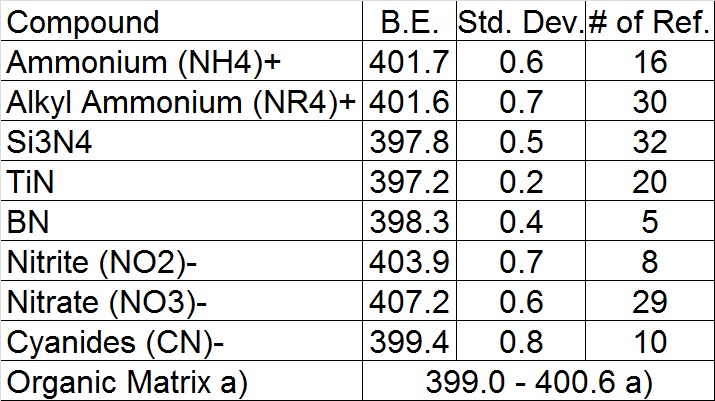
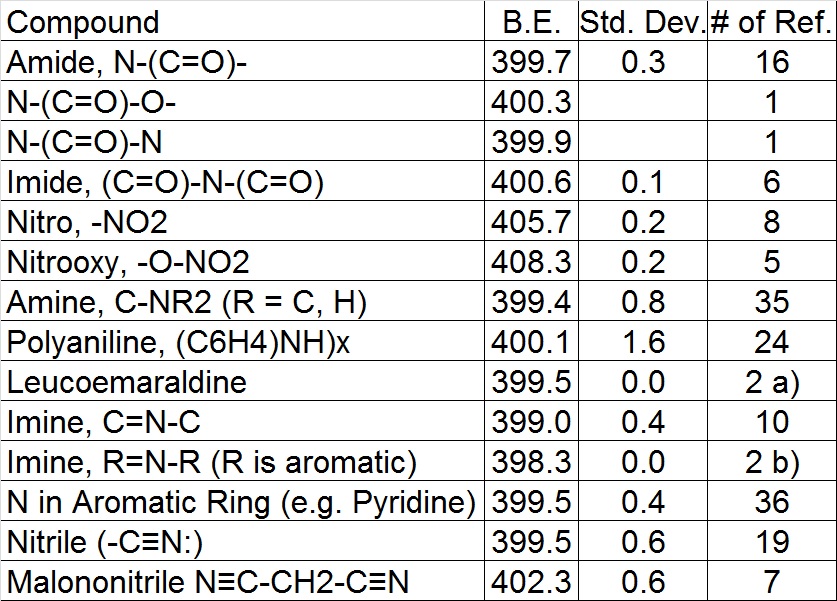
Nitrogen, (N)
N (1s) BEs
Neodymium
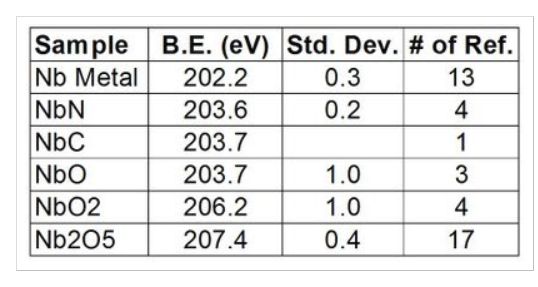
Niobium, (Nb)
Nb (3d5/2) BEs
Nickel, (Ni)
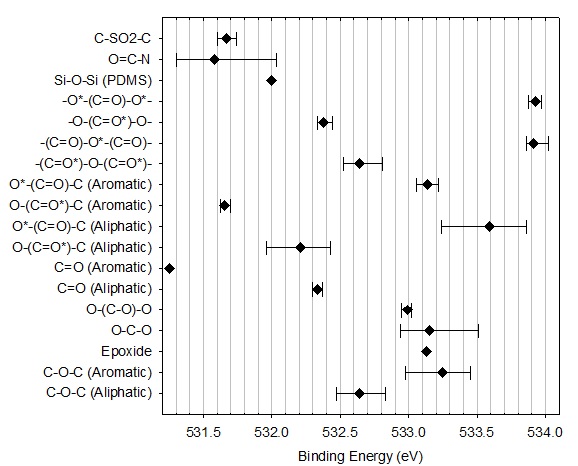
Oxygen, (O), in Polymers
O (1s) BEs
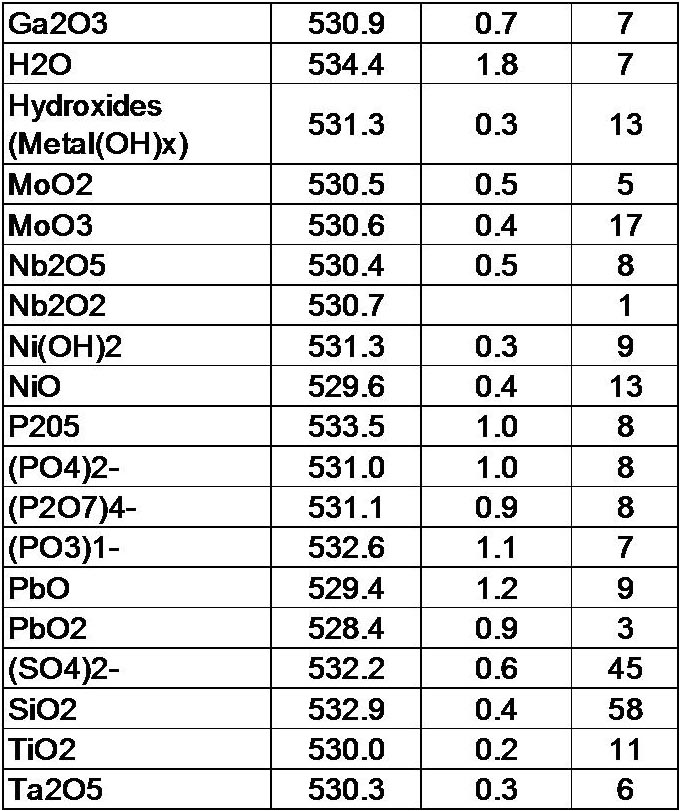
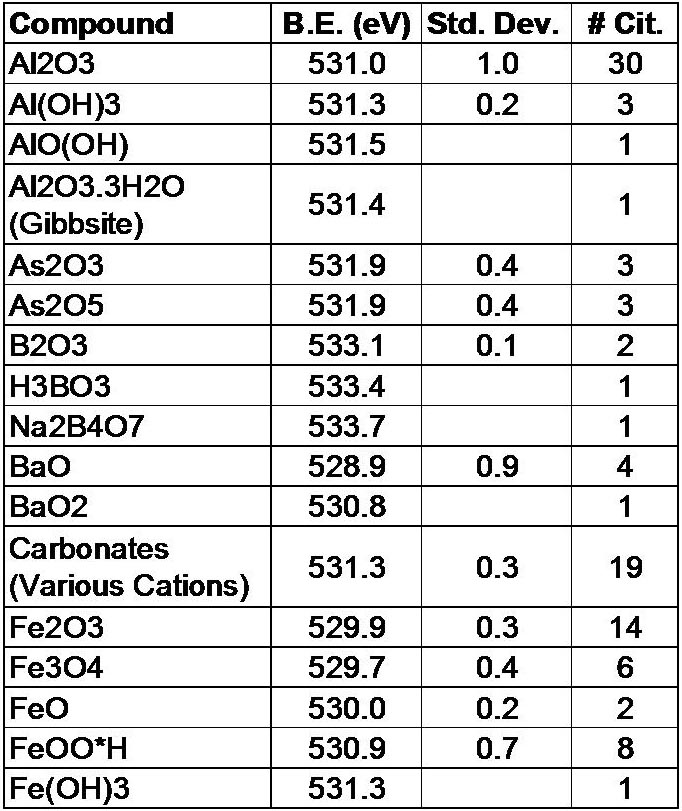
Oxygen, (O)
O (1s) BEs
Osmium, (Os)
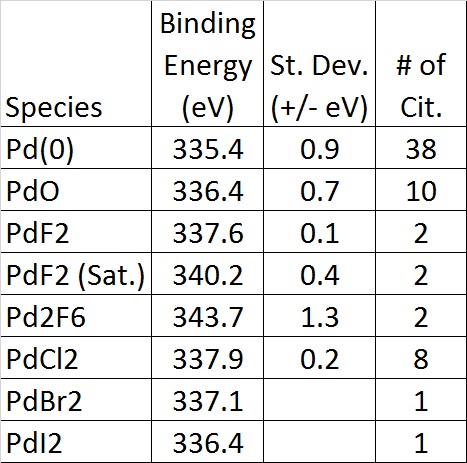
Palladium, (Pd)
Pd (3d5/2) BEs
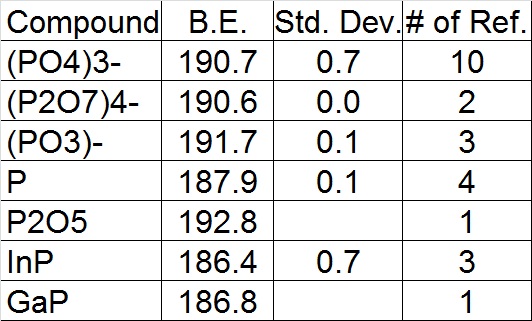
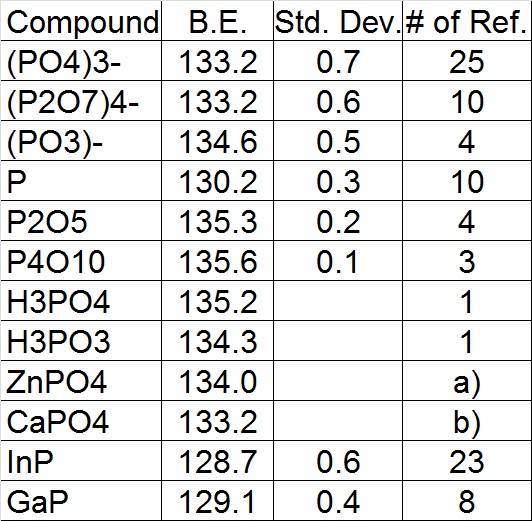
Phosphorus, (P)
P (2p3/2) BEs
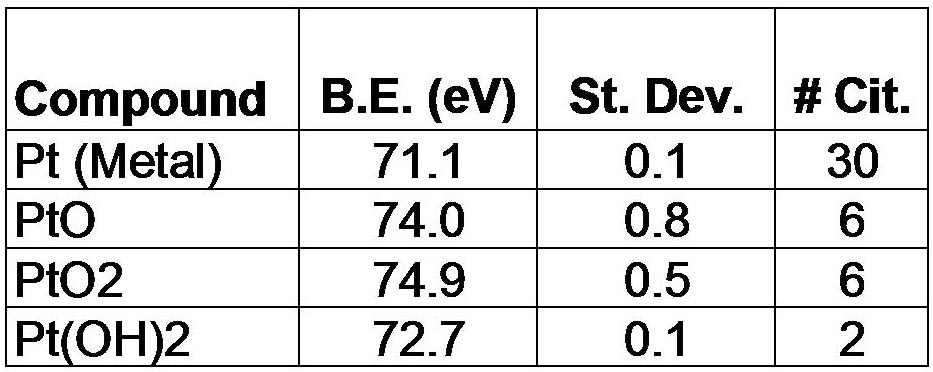
Platinum, (Pt)
Pt (4f7/2) BEs
Praseodymium
Rhenium, (Re)
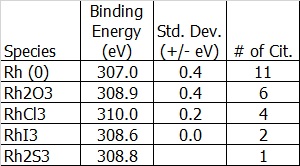
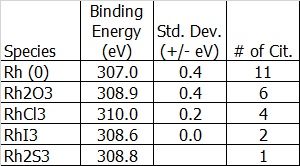
Rhodium, (Rh)
Rh (3d5/2) BEs
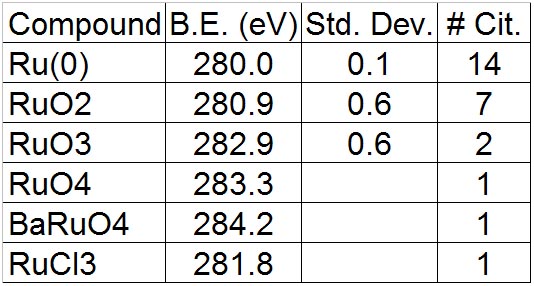
Ruthenium, (Ru)
Ru (3d5/2) BEs
Samarium, (Sm)
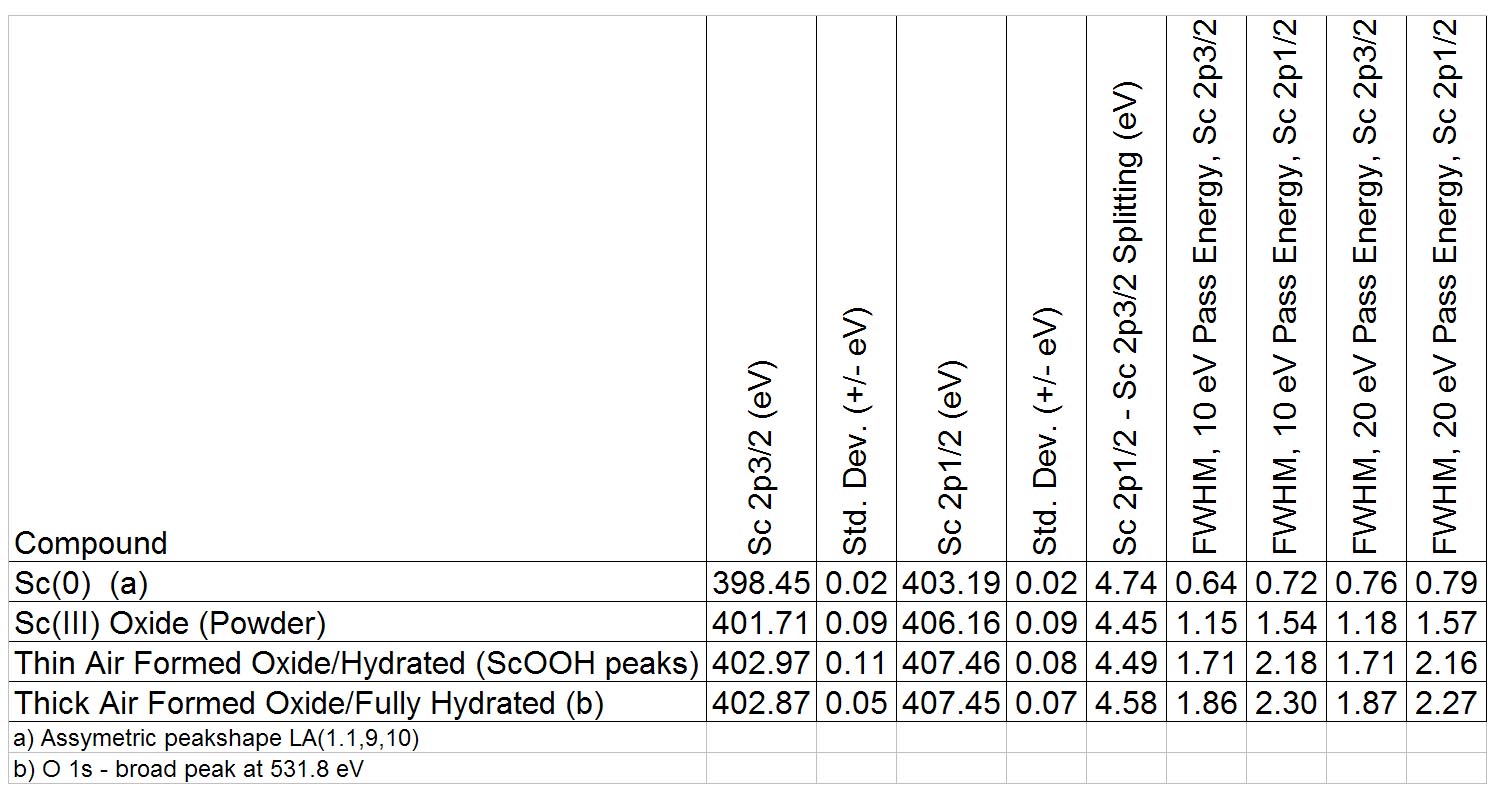
Scandium, (Sc)
Sc (2p3/2) BEs
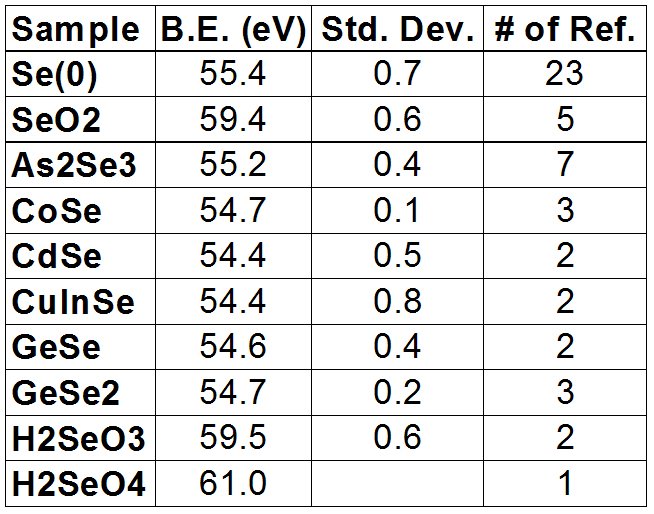
Selenium, (Se)
Se (3d5/2) BEs
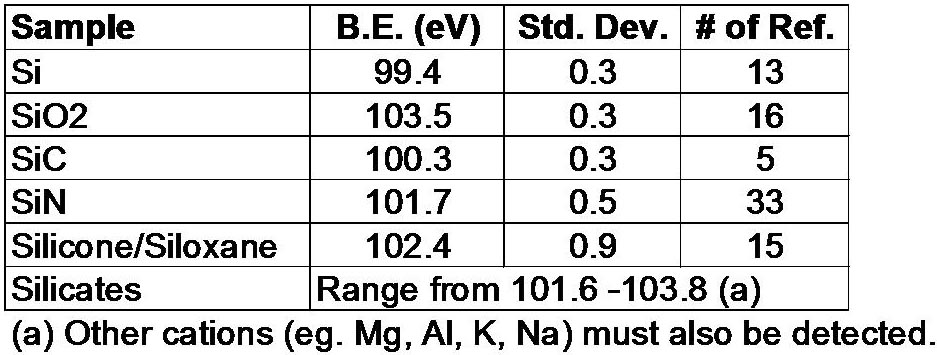
Silicon, (Si)
Si (2p3/2) BEs
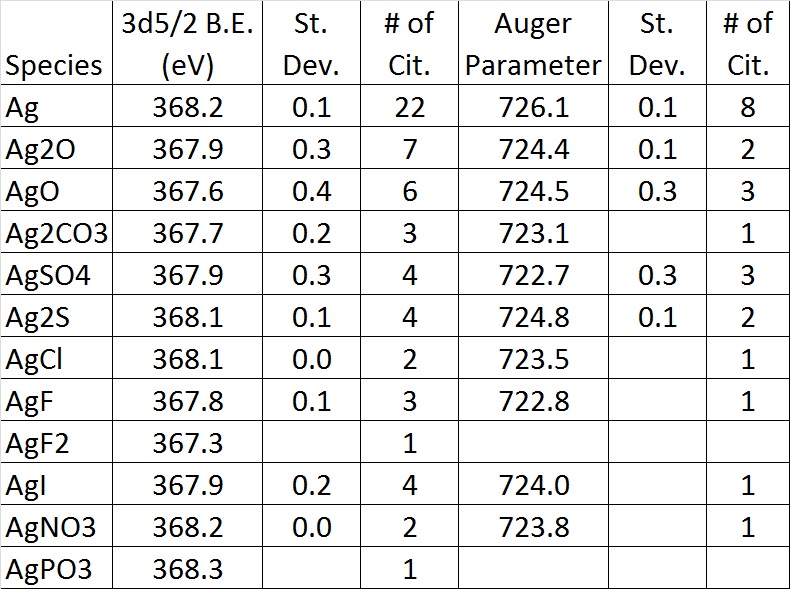
Silver, (Ag)
Ag (3d5/2) BEs
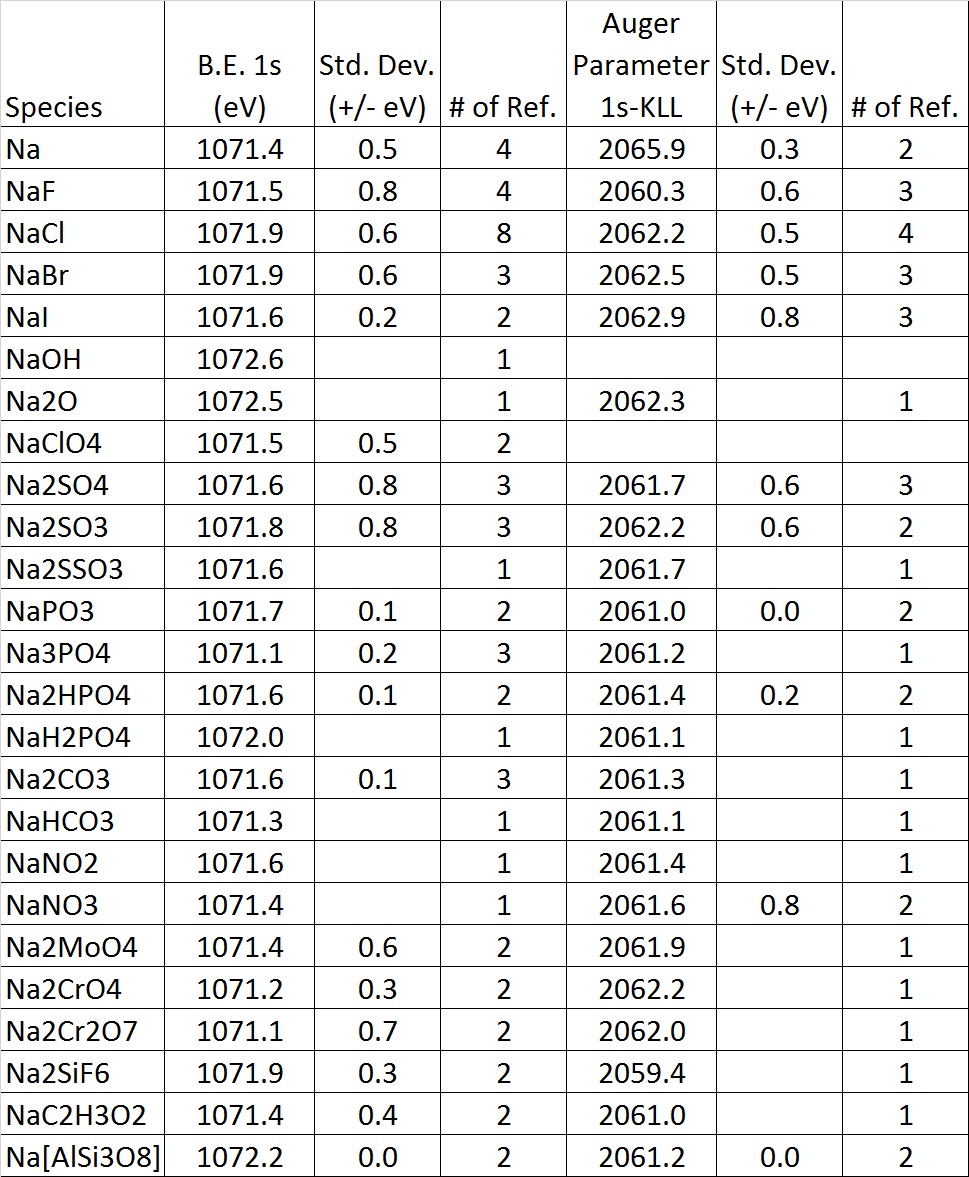
Sodium, (Na)
Na (1s) BEs
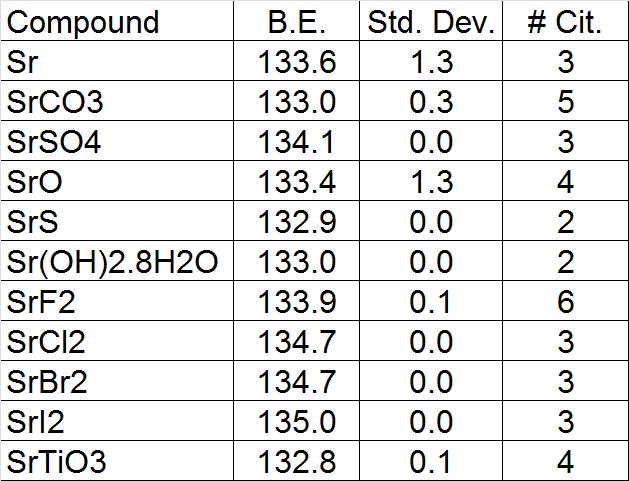
Strontium, (Sr)
Sr (3d5/2) BEs
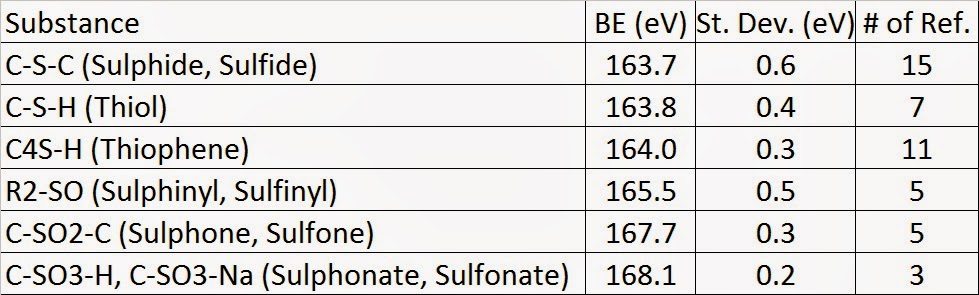
Sulfur, (S), in Organics
S (2p3/2) BEs
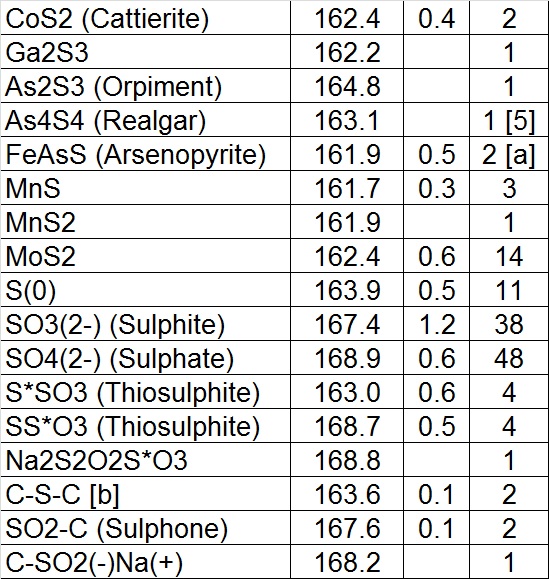
Sulfur, (S), in Inorganics
S (2p3/2) BEs

Tantalum, (Ta)
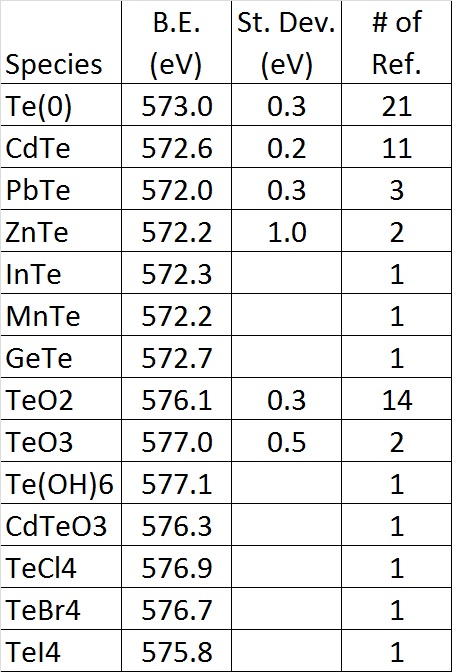
Tellurium, (Te)
Te (3d5/2) BEs
Technitium, (Tc)
Terbium, (Tb)
Thallium, (Tl)
Thorium, (Th)
Thulmium, (Tm)
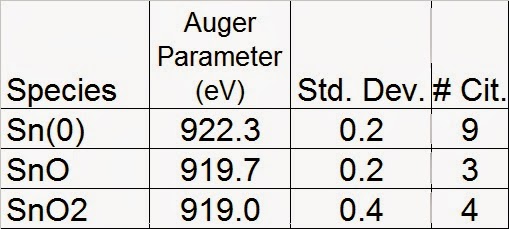
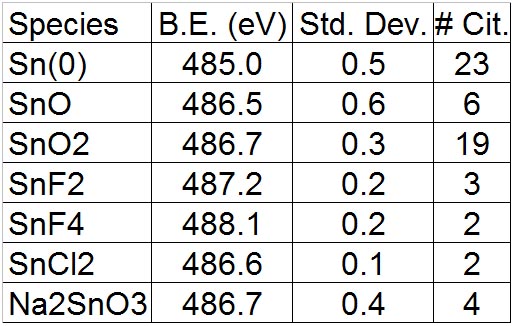
Tin, (Sn)
Sn (3d5/2) BEs
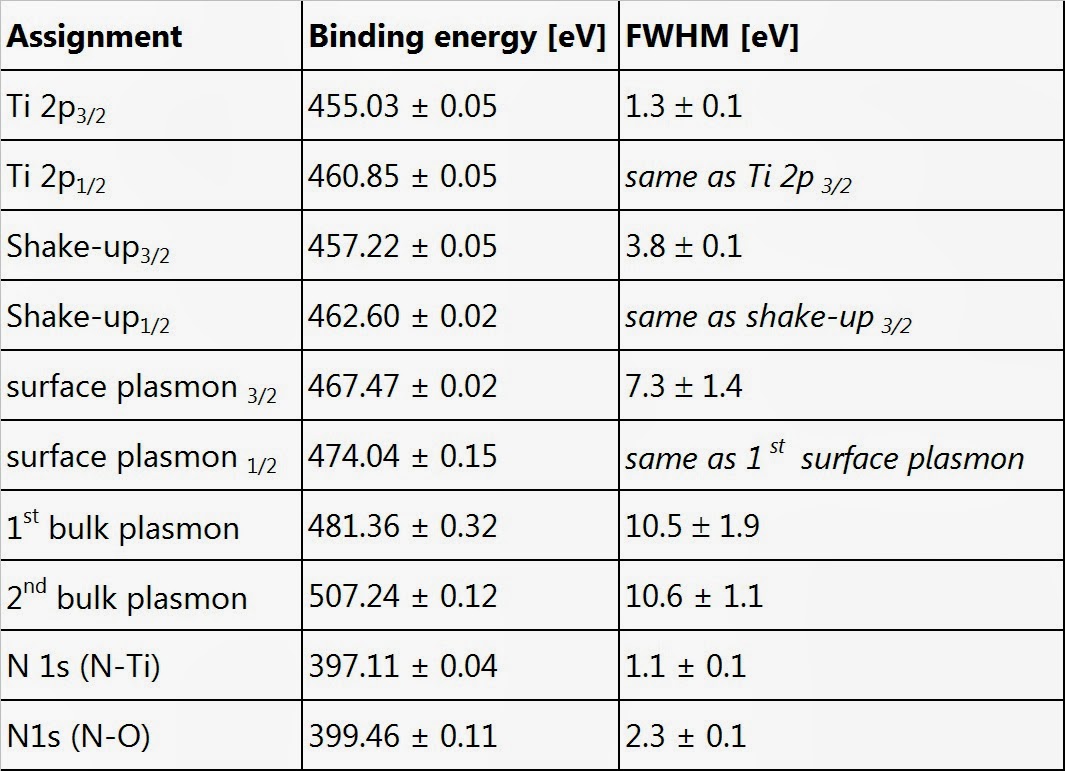
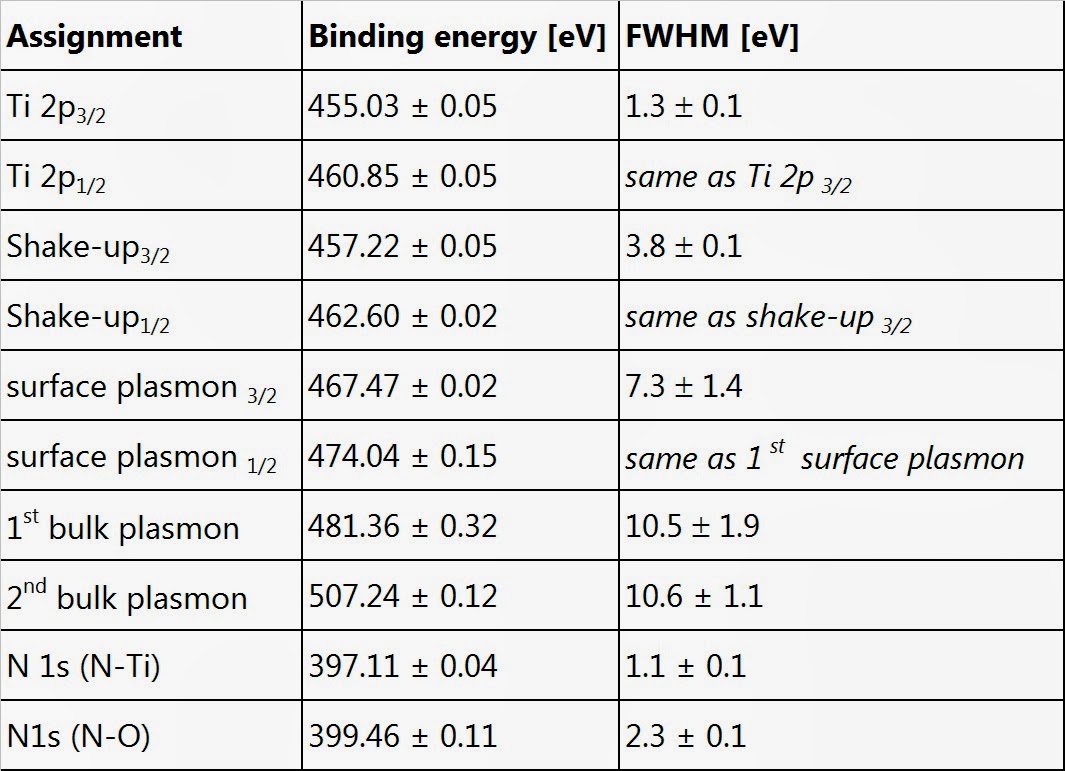
Titanium, (Ti)
Ti (2p3/2) BEs
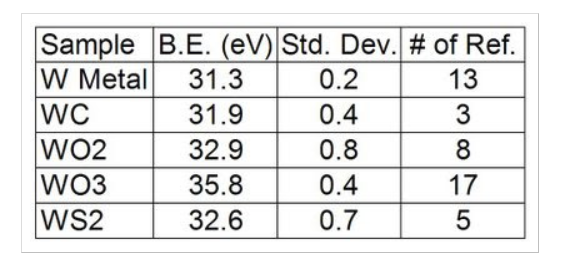
Tungsten, (W)
W (4f7/2) BEs
Uranium, (U)
Vanadium, (V)
Xenon, (Xe)
Ytterbium, (Yb)
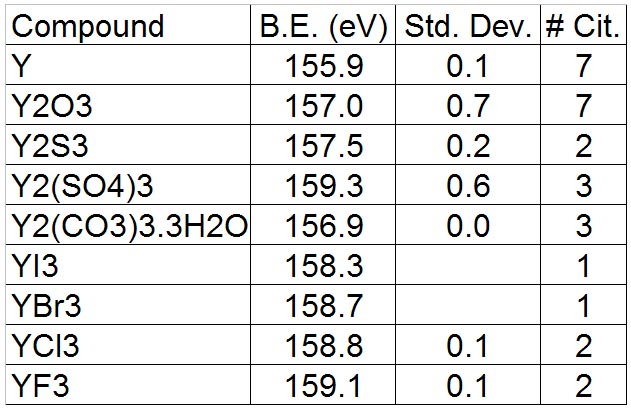
Yttrium, (Y)
Y (3d5/2) BEs
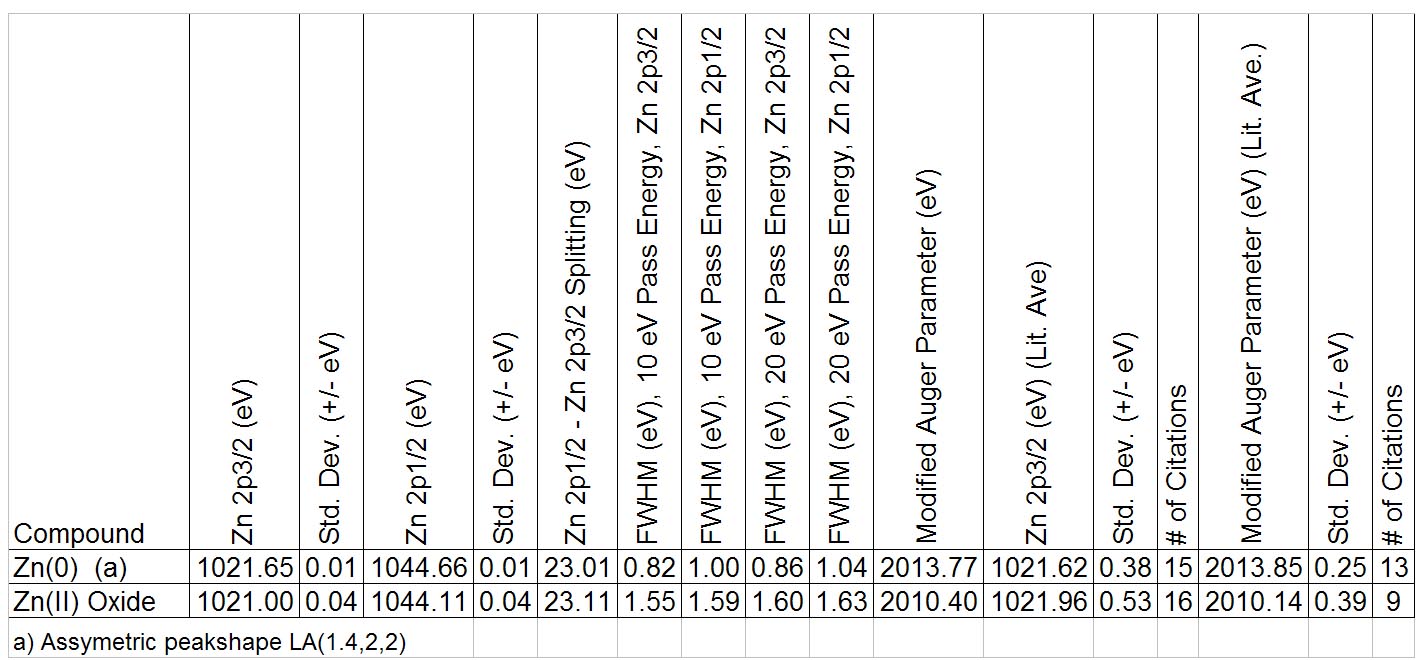
Zinc, (Zn)
Zn (2p3/2) BEs
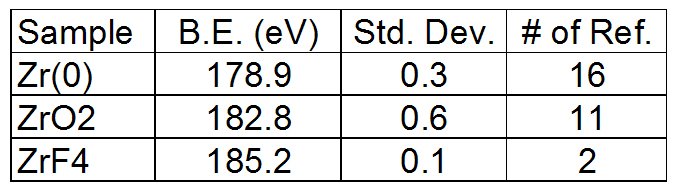
Zirconium, (Zr)
Zr (3d5/2) BEs